
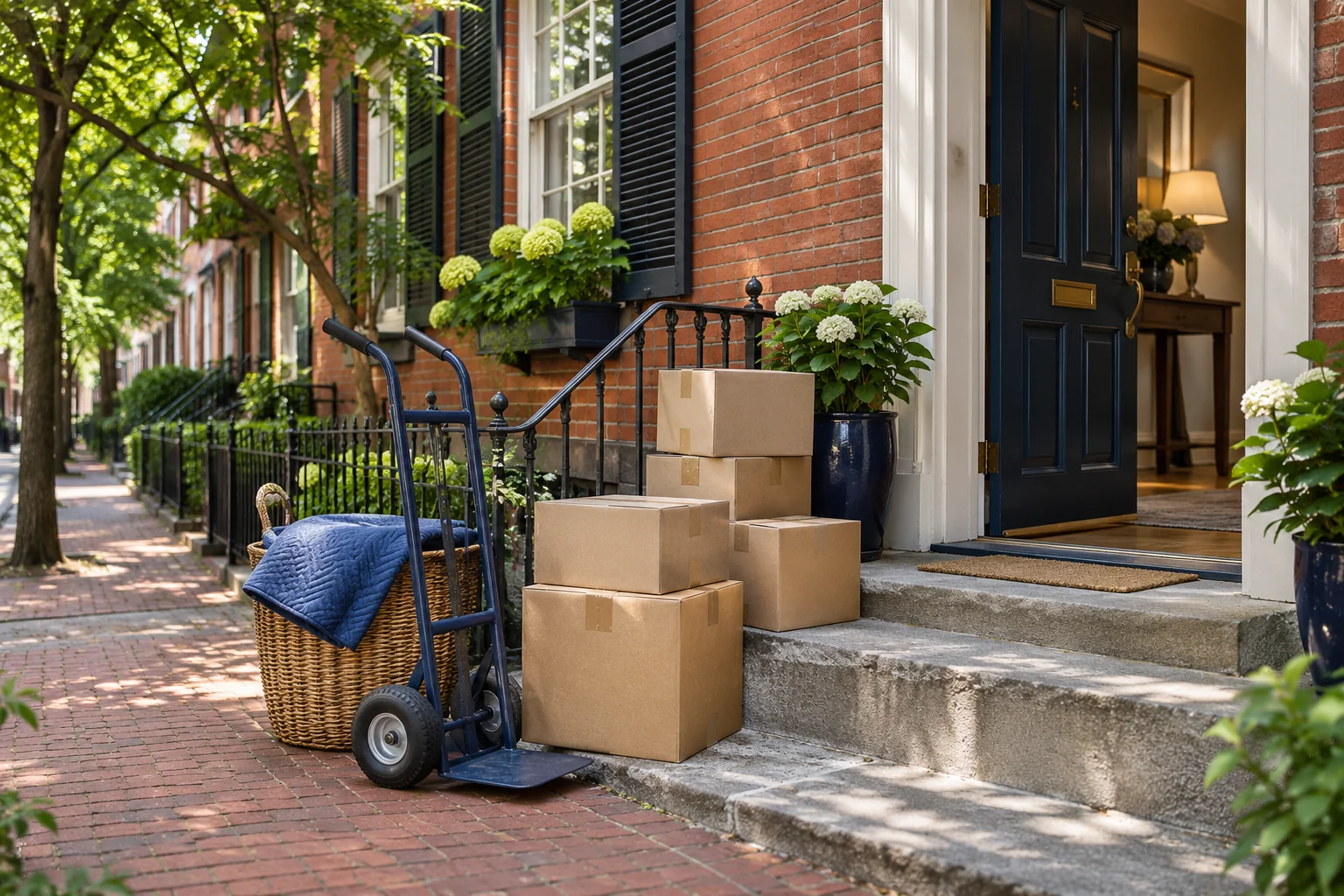
Choose a Providence address by daily use
Providence has a compact street grid in some areas, steep approaches in others, and housing that ranges from older multifamily buildings to newer apartments. The useful question is how a particular address will work for your household. A map pin cannot show a narrow stair landing, the late shift you work, or whether a stroller fits through the front entry. Walk the route you will use every day before you commit to a home.
The city's Neighborhood Snapshots project identifies 25 neighborhoods. Use that local framework to start a search, then compare individual streets. College Hill, Federal Hill, Fox Point, Elmhurst, and the West End are useful names to recognize when reviewing listings, but a neighborhood label is not a promise about price, parking, quiet, or the condition of a building. Those questions need an address-level check.
Spend time outside a prospective home at the hours that matter to you. Watch how vehicles park, where deliveries stop, and whether a bus stop or workplace entrance creates foot traffic. Look at the walk to groceries in the rain as well as in good weather. If another person shares the home, compare your routes together. A place that makes one commute easy can make the other person's day much harder.
Read the building before planning the load
Older Providence homes can make furniture access the main moving problem. Measure doors with the door open, record the depth of each landing, and check low ceilings above stairs. Measure the longest piece you intend to bring. A sofa that clears the front door can still fail at the turn to a third-floor unit. Pictures help explain the issue, but measurements determine what can pass safely.
Ask which entrance the owner permits movers to use. A rear staircase may look convenient yet have weak steps or a gate that cannot stay open. In a larger building, ask about loading space, elevator bookings, floor protection, and a certificate of insurance requirement. Get the building's rules in writing early enough to share them with everyone involved. Do not assume an ordinary passenger elevator is approved for a furniture move.
Our apartment moving guide explains how to handle shared halls and time windows. For a house, create a simple room plan before packing. Name rooms by both floor and use, such as second-floor front bedroom. That makes a label useful even when the home is empty and the household has not agreed which child gets which room.
Schools and a change of address
Start school research with the district rather than a property advertisement. Providence Public Schools' registration and school-choice guidance explains that a neighborhood preference does not guarantee placement at a particular school. Ask the district to review your child's grade, the new address, available programs, and any relevant application dates. Keep a record of the answer and when you received it.
Put enrollment documents in a folder that travels with you. Ask which proof of residence is acceptable when a lease starts before a utility bill exists. Arrange the transfer of attendance records, health documents, and learning plans through the schools' normal procedures. If your child uses specialized services, discuss the handoff before the last day at the old school. Do not pack the only paper copies in a sealed moving carton.
The school day also changes the housing decision. Test the morning trip, confirm how transportation eligibility is decided, and ask about care before or after school. An adult's work schedule may depend on a program with its own enrollment process. A midyear move deserves a short transition plan: who greets the child, where they report, how meals work, and which supplies they need immediately. Those small answers reduce first-week confusion.

Salaries, income, and a workable housing budget
Census QuickFacts reports Providence's median household income at $68,119 for 2020–2024, in 2024 dollars. This is a multiyear estimate for the city, so use it to understand local context rather than as a wage target or a current rental budget. Households above and below that midpoint can have very different care costs, debts, and housing needs.
BLS regional mean hourly wage: $33.31, May 2025. This is a metropolitan benchmark. It is not a Providence salary offer or a household income figure. A household can include more than one worker, while a wage estimate describes jobs. For your budget, use the actual pay, hours, benefits, and deductions attached to your employment.
Write down monthly take-home pay first. Add rent or a mortgage payment, heat, electricity, water charges if applicable, internet, transport, food, debt, and child care. Include parking if it costs extra. Ask the landlord exactly which utilities the lease includes. A lower advertised rent can be a poor comparison when one unit includes heat and another requires you to pay for a large, drafty space.
Keep the moving budget separate from ordinary bills. Deposits, a short period of overlapping rent, cleaning, packing supplies, a new parking arrangement, and a delayed first paycheck can land in the same month. The moving costs and budgeting guide provides a way to list those expenses without treating a rough online figure as a fixed price. Preserve a cash reserve for real surprises instead of using it to make an unaffordable lease appear manageable.
Work routes and transport choices
Providence can support different travel patterns, but the practical choice depends on the exact trip. A walkable address near your workplace may cut the need for a second car. A late shift or a job outside a transit corridor may make a vehicle essential. Check current schedules with the operator, including the last return trip. A service that works on weekdays may not meet a weekend shift.
When testing a driving commute, start at the home's actual driveway or parking spot and end at the place where you will leave the car. Include the walk from the garage to your desk. Try the trip during the hours you will use it. Comparing only the fastest map estimate removes the very parts of travel that often cause stress: a left turn, a full garage, or a slow final mile.
Separate commuter travel from the moving truck route. A delivery vehicle has different clearance, turning, and stopping needs. Share any access limits in advance and check current road work shortly before moving day. For city-street loading, ask the appropriate city office what permission is required at the proposed location. A space outside your door is not automatically a legal loading area, even if a neighbor says trucks usually stop there.
Packing for a home with limited spare space
A move into Providence often involves deciding what a smaller or differently shaped room can hold. Make those decisions before the truck arrives. Draw a rough furniture layout, mark door swings, and leave space for walking. The bedroom's total floor area does not tell you whether a bed, dresser, and desk will fit once windows, radiators, and closets are considered.
Sort belongings by use rather than by how long you have owned them. Keep what serves the new home, set aside gifts you truly want, and remove things that no longer earn their space. Use our room-by-room packing guide to pace the work. Start with items you do not need every week, then leave a small working set of dishes, clothes, cleaning supplies, and bedding until the end.
If storage is necessary, decide what it solves and when it will end. A unit can bridge a lease gap or hold furniture while a room is repaired, but it also creates another loading and unloading task. Store a numbered inventory with photographs. Keep documents, daily medicines, and items you must access immediately out of storage. Pick a realistic review date so a temporary arrangement does not become an unnoticed monthly bill.
Protect the home during loading and delivery
Clear the route before anyone lifts a heavy piece. Remove loose mats, boxes on landings, and objects behind doors. Tell the crew about damaged steps, uneven paving, or a handrail that needs repair. Floor protection should suit the surface and stay secure under foot. A cover that slides on a polished floor creates another hazard instead of solving one.
Decide where children and pets will spend the busiest hours. An open entry door is part of the work, so a quiet room inside the loading route may not be secure enough. Arrange a trusted adult, a safe closed room beyond the work area, or another suitable place. Put food, leads, chargers, and comfort items in a separate bag. That bag should stay with the person responsible for it.
At delivery, give one person the role of directing placement. Post simple room signs and keep the paths to those rooms open. Unload the essentials in a planned order, especially beds and the items needed for the next workday. Inspect furniture while it is still accessible. If you see damage, record the item and condition clearly and follow the terms of the moving agreement rather than relying on a conversation that nobody writes down.
Set up the first week in Providence
Make the home usable before making it look finished. Locate shutoffs, the electrical panel, smoke alarms, and the place where you will keep keys. Confirm that utilities work and photograph any preexisting damage if you rent. A dated move-in record is easier to make before furniture covers walls and boxes fill the corners. Send required condition reports through the channel named in your lease.
Check local waste and recycling instructions before leaving packing debris outside. Flatten clean cardboard, separate reusable packing material, and confirm how bulky items must be handled. Ask the owner where bins belong and which collection arrangement serves the property. Large buildings and small rentals may have different systems. Avoid assuming that a pile beside a neighbor's bin shows what the city will collect.
Plan a few short local trips while unpacking. Find the nearest appropriate grocery store, pharmacy, library, and place for routine care. Transfer ongoing appointments and make sure important mail reaches the new address. For those administrative steps, use the utilities and address-change checklist. Keep a written list of unfinished tasks so they do not disappear under a week of boxes and work.
A practical check for mixed-use streets
A Providence home above a shop or beside a busy commercial block deserves a closer look at how the building operates. Ask when deliveries arrive, where refuse is stored, and which doors serve the residential floors. Find out whether a business uses the same rear path that you plan to use for moving. A shared route needs clear communication, especially if it must remain open during business hours.
Visit the apartment with the windows open and shut. Listen from the room where you will sleep, then check where the heating or cooling equipment sits. Ask the owner how maintenance calls are handled outside office hours. These observations are more useful than a broad claim that an area is lively or quiet, because they concern the room you will actually occupy.
For a remote worker, test the location of the work desk against outlets, daylight, privacy, and the internet connection available to the unit. Ask the provider about service at the exact apartment number and arrange activation before an important meeting. Keep a temporary plan for the first workday if equipment arrives late. You may need a charged hotspot, an alternate workspace, or a day without calls while the furniture is placed. Tell the other adults in the home which hours need a quiet room so the unpacking plan does not conflict with paid work.
Compare nearby locations with the same questions
Providence is easier to assess when you compare it with specific alternatives. Read the Cranston moving page if you want to evaluate homes south and west of the city, or the East Providence guide if your work and family trips point across the river. Use the same budget and commute tests for each address instead of deciding from a citywide reputation.
Think about how long the home needs to work. A one-year rental can serve a different purpose from a house you expect to keep through several school stages. Consider stairs, work space, visiting relatives, storage, and the number of cars your household actually uses. List the needs that cannot be changed after move-in. Paint color can wait; an unworkable staircase or a commute that conflicts with care duties is harder to fix.
Before the final packing day, put the essential facts on one sheet: both addresses, access instructions, building contacts, key arrangements, room names, and who will be present. Share it only with the people who need it. This turns a large amount of research into clear instructions for the move. The result should be a home you can use from the first night and a transition built around your real routine.
Sources and further reading
Source dates and the distinction between estimates, rules, and planning examples are given in the text. Check the linked authority before acting on requirements that may change.