
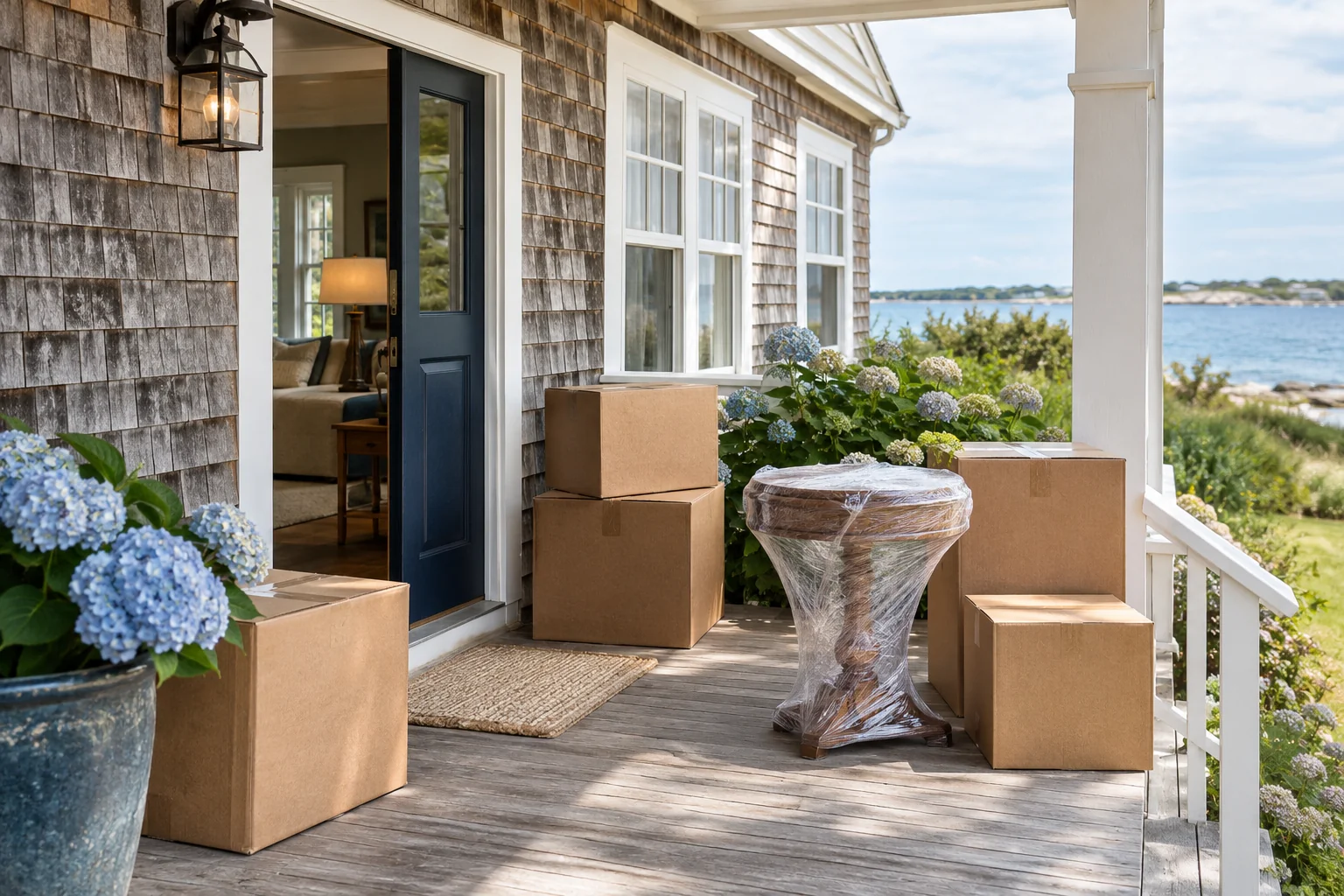
Start with the Newport you will live in
A home near the harbor can produce a very different daily routine from a home farther from the waterfront. Walk around each address while shops are open, when residents return from work and during an ordinary evening. Notice delivery vehicles, sidewalk activity, stairs and the actual distance from the legal parking space to the entrance. A listing photograph can show a pleasant facade while leaving out the corner a truck must negotiate. The first useful moving document is a simple description of the building and its access.
Compare the Broadway area, the Point, streets near Thames Street and homes toward the northern part of the city through the tasks you repeat every week. Where will you buy groceries? Can you store a bicycle securely? Does the residence have laundry equipment or shared facilities? A waterfront location may suit someone who walks to work, while a different address may work better for a household with several vehicles. These are questions to test at the property, rather than conclusions to draw from a neighborhood name.
Newport sits at the southern end of Aquidneck Island, so off-island travel belongs in the housing decision. Compare the neighboring Middletown moving guide if you are still choosing a location. Two addresses can have similar rents but very different driving patterns, storage options and delivery conditions. Keep notes on those differences before comparing floor plans.
Read the lease as a calendar
Ask whether the property is available for the entire period you need. A lease that runs through winter or the academic year is not interchangeable with a year-round tenancy. Write the occupancy start, occupancy end, renewal terms and furniture responsibilities on a calendar. Confirm what happens to any existing furniture before you schedule delivery of your own. If the residence is furnished, list what stays and where personal items may be stored.
Photograph the condition of the unit during the handover, including floor marks, appliance interiors and the spaces behind large furniture. Obtain the inventory in writing when furnishings are included. Identify who provides keys, what happens if arrival is delayed and which door the moving crew should use. Do not assume that permission to occupy the residence includes permission to park a large vehicle in a courtyard or shared driveway.
If two housing contracts leave a gap, plan the gap as a separate stage. Determine which belongings travel to temporary accommodation and which remain packed. The guide to temporary housing between moves explains how to avoid sending essential documents, work equipment and everyday clothing into an inaccessible shipment. A clear first-night plan is especially useful when a key handover takes place late in the day.
Make parking a specific part of the move
The City of Newport parking and transportation page warns that summer traffic and on-street parking can be difficult, particularly on weekends. Its residential parking program applies to designated streets, with restrictions varying by location and time. Check the current signs and the city's current instructions for your exact street. A resident parking permit should never be treated as a reservation for the moving truck or as authority to block a driveway.
Give the mover street-level photographs showing the intended loading position, intersections and any overhead obstructions. Include the building number and the side of the street. If a truck cannot stand next to the entrance, measure the walking route rather than estimating it from a map. Note gates, steps, uneven paving and the point where a dolly must be lifted. A longer carry can affect staffing, time and the equipment used.
Discuss access with the property manager before moving day. Ask who can authorize loading on private property and whether other residents need notice. Keep fire access, pedestrian routes and neighboring doors clear. If temporary parking arrangements require municipal authorization, obtain the current procedure directly from the responsible city department. Avoid relying on cones left by a previous occupant or verbal advice from someone who does not control the space.

Schools and the household schedule
The Rhode Island Department of Education's Newport district report card lists Claiborne Pell Elementary School, Frank E. Thompson Middle School and Rogers High School. Use the district's current enrollment process to confirm placement, required documents and attendance dates. A school name in a property advertisement is not an enrollment decision. Families considering another educational option should verify that option's admissions process separately.
Build the transfer around the student's needs. Request records early, identify who sends them and keep copies of documents that may be needed before a permanent internet connection is ready. Discuss support plans, medication instructions, language services and course placement directly with the receiving school. For an older student, confirm how credit transfers may affect graduation requirements or the next term's schedule. A household move and an academic transfer have different deadlines.
Try the school journey from the new address. Consider weather, safe crossings, pickup arrangements and the time needed for after-school activities. Ask the district about current transportation eligibility rather than assuming that every resident receives a bus assignment. Pack a small school box with chargers, notebooks, sports clothing and any materials needed during the first week. Our moving with children guide covers ways to make that transition easier to manage.
Income, salaries and a workable Newport budget
The Census Bureau reports Newport's median household income as $86,313 for 2020–2024, expressed in 2024 dollars. Household income can include more than one earner and other income sources. It is not the salary a newly hired worker should expect. Use it as community context, with the survey period attached, rather than as a recommendation for how much to spend on housing.
For occupation-specific pay, consult the Rhode Island Department of Labor and Training wage tables. Select the occupation, geography and measure that fit the job you are considering. Hourly wages, annual wages and household income answer different questions. Compare an offer using its guaranteed hours, benefit deductions, paid leave and travel requirements. For seasonal work, assess the entire year instead of multiplying a busy month's earnings by twelve.
Set up a budget using your own take-home income. Include rent or mortgage costs, utilities, transportation, insurance, groceries and any storage payment. Keep one-time moving costs separate from recurring expenses. A furnished rental can reduce the amount shipped while increasing the need to store furniture elsewhere. An apartment with no parking may produce transport costs that are absent from the advertised rent. Write those tradeoffs down before treating one property as the cheaper option.
Check the building before packing the furniture
Older buildings can have staircases that turn sharply, smaller door openings and rooms reached through narrow passages. Measure the complete route for the largest items, including stair landings and the inside clearance of doors. The measurement that matters may be a corner halfway upstairs rather than the front entrance. Tell the mover about heavy dressers, sleeper sofas and large tabletops before they are wrapped.
Decide what can be disassembled safely and who will do that work. Photograph furniture connections before removal and keep hardware in labeled bags. Ask whether a bed frame must be taken apart to pass through a doorway. Do not assume that a window provides a usable alternative delivery route. Any unusual handling should be reviewed by appropriately equipped professionals and authorized by the owner before the scheduled arrival.
Plan protection around the building's actual surfaces. Entry mats, runners and corner protection can reduce avoidable marks, but materials must suit the floor and remain secure under foot traffic. Keep cartons away from narrow hallways while the crew carries furniture. Assign one person to direct items to rooms, using simple labels that match signs on the new home's doors. A clear destination reduces repeated handling inside tight spaces.
Coastal conditions and everyday storage
Evaluate the specific property for water exposure and moisture. Ask about previous water entry, drainage and the location of utility equipment. Review relevant flood information and insurance questions with qualified sources for the address. Do not assume that an inland-looking street has no exposure, or that a raised living room means a basement is suitable for storing books and upholstered furniture.
Inspect the spaces you expect to use for storage. A basement, detached shed and climate-controlled facility provide different conditions. Look for damp surfaces, ventilation problems and restricted access. Keep paper records, photographs and delicate textiles out of questionable areas until conditions are understood. If a separate unit is necessary, calculate the full term and the cost of transporting items in and out, not just the first month's payment.
For a household arriving from a larger home, measure storage furniture as carefully as beds and sofas. Tall shelving needs both ceiling clearance and a stable position. Outdoor equipment may need cleaning and drying before it is packed. Separate beach gear and seasonal clothing so they can be located without reopening every carton. The self storage guide can help you decide what should remain off-site and what belongs at home.
Choose a moving date with room for change
Start with the date you can legally enter the property, then work backward through packing, travel and cleaning. Ask about building rules and local conditions that could affect truck access. A weekday move may suit some addresses, but it is not automatically available or cheaper. Match the plan to the lease, work obligations and the mover's confirmed schedule rather than an assumed quiet period.
Keep a delay allowance for an off-island journey, weather or a late property handover. Save a phone-accessible copy of the moving documents and directions. Carry keys, medication, identification and the first night's supplies yourself when practical. If you will not be present, name the person authorized to receive the shipment and explain what that person can approve. Do not leave these decisions until the vehicle is outside.
Review the inventory before loading begins. Identify items that should remain with you, property that belongs to the landlord and pieces requiring special handling. At delivery, check room placement and visible condition while the crew is still available to discuss concerns. Keep packaging for delicate equipment until it has been checked. Document any issue promptly and follow the written procedure in the applicable moving agreement.
Settle into Newport without losing track of the basics
During the first days, confirm waste collection arrangements, utility accounts and the address used for deliveries. Learn the building's exits and locate shutoffs with the owner's guidance. Test internet service where you intend to work, rather than assuming that a connection at the router reaches every room. Keep unpacked cartons clear of electrical panels, heating equipment and shared access areas.
Make a list of ordinary destinations, such as groceries, medical appointments, school and work, and try the routes before a rushed morning. Update recurring deliveries and review subscriptions tied to the former address. Keep one folder for the lease, moving documents, receipts and school correspondence. After the essentials work, unpack by function: sleep, meals, clothing, work and then less urgent storage. That sequence gives the household a usable home while the final decisions are still being made.
What should stay with you on arrival?
Keep the belongings that would stop your first day from working out of the main shipment. That usually means identification, medication, a change of clothing, necessary chargers and access instructions. A worker starting a shift before unpacking is complete may need uniform pieces, identification badges or a laptop immediately. A child may need familiar bedtime items. Prepare those bags before the remaining rooms become packing areas, and place them somewhere clearly marked for personal transport.
Carry a separate folder containing the lease, utility confirmations and the information needed to reach the person handing over the keys. Save digital copies that remain available without mobile reception. Write the full street address, unit number and authorized entrance in one consistent form. For a shared building, add the name displayed on the intercom if it differs from the lease. Small access details become much harder to resolve when the household and the truck arrive at different times.
Check the destination before releasing the final load for delivery. Confirm that the key works, the route is clear and the rooms are ready to receive furniture. If cleaning or maintenance is unfinished, agree on the next step with the responsible person before the crew starts carrying belongings inside.
Sources and further reading
Source dates and the distinction between estimates, rules, and planning examples are given in the text. Check the linked authority before acting on requirements that may change.